

I’ve been writing about YouTube for businesses and trying to answer the question: why do some companies struggle so much on YouTube compared to creators?
Businesses seems to have a massive advantage. They know their products better than anyone. They have more staff, higher budget, brand recognition, and plenty of people interested in their tools.
Yet creators talking about the same software can get 10 or 20 times more views and build a career using their YouTube channels.
Let me show you the most common patterns I’ve noticed after looking across several channels to answer that question.
Channel focus: Multiple jobs vs audience focus
Companies often use their YouTube channel for several business goals at the same time, like product launches, tutorials, ads, webinars, customer stories, partnerships, etc. But that’s not how thriving creators operate on YouTube.
Publishing mixed content on the same channel is a common mistake on YouTube. And even if each video is useful, they attract different audiences and make the channel a mess.
For example, ClickUp’s recent uploads show what this mix looks like. A 45-second tutorial about setting up an integration, product demos, webinar clips, long leadership sessions, and release announcements.
This also helps explain a bit why the view numbers vary quite a bit for each upload (although the channel has an incredibly low view count).
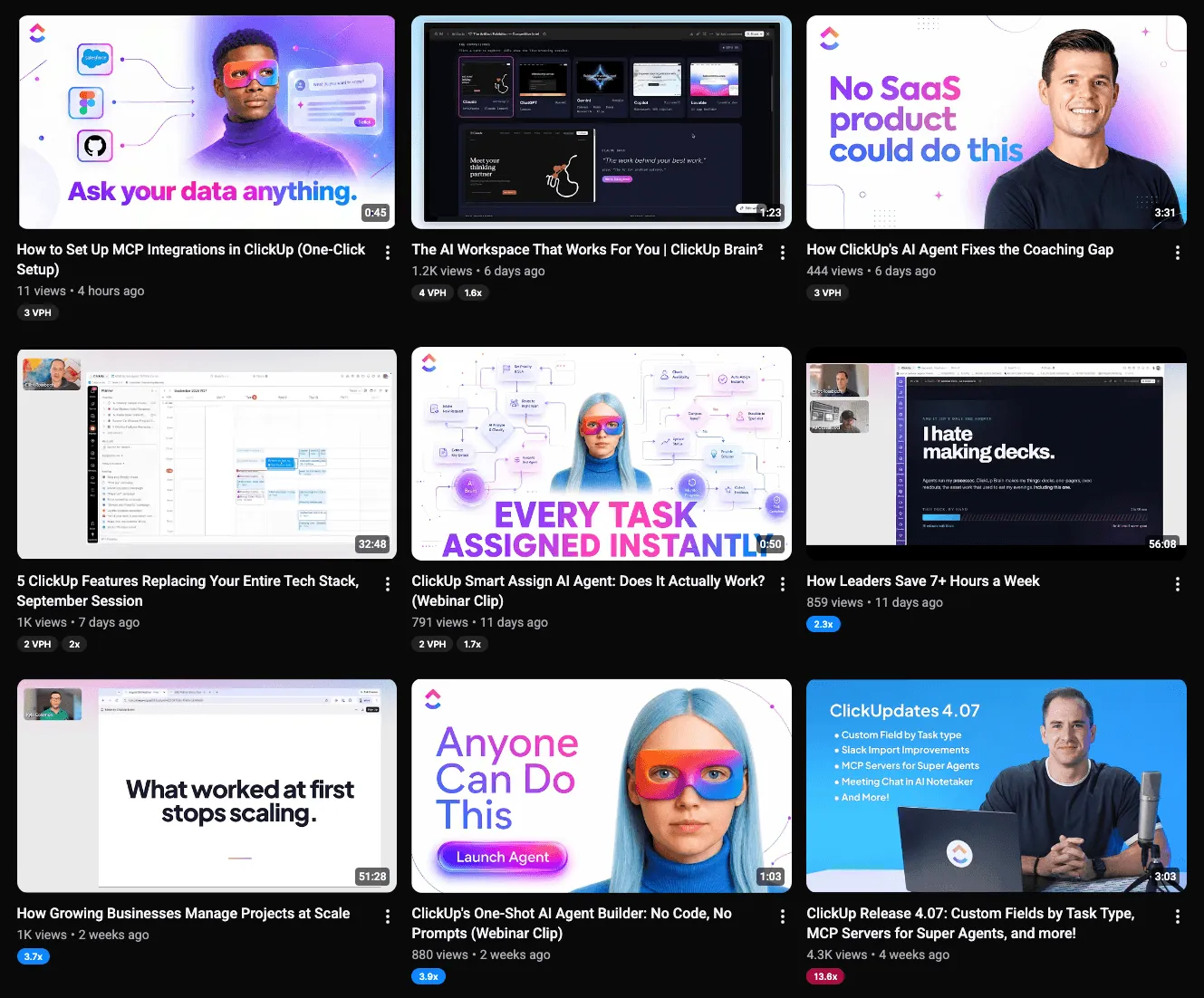
As an example, webinar clips have lower views than product updates, but this doesn’t mean webinar clips are a failure.
The problem is mixing the audiences: someone who came for product help may not care about a webinar, and vice versa.
Notion has the same problem.
Recent uploads include customer stories, a 20-minute beginner guide, ads, and tutorials.
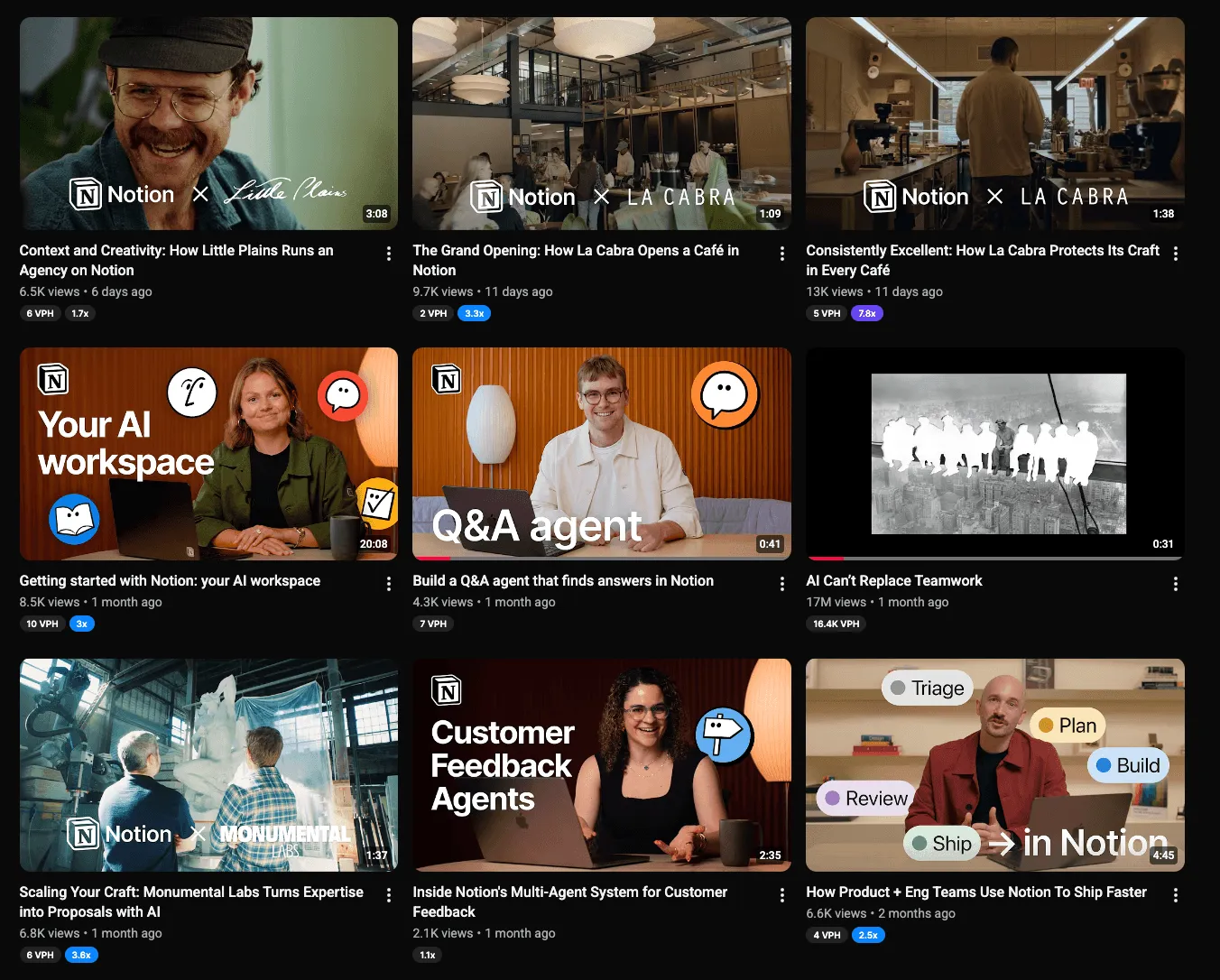
I wanted to see if this content mix was common, so I scrolled to a random sample of videos, and this is what I saw:
- podcast episodes about AI;
- tutorials about Notion;
- founder content (Founder Fridays);
- customer stories;
- and videos about using Notion with Claude.
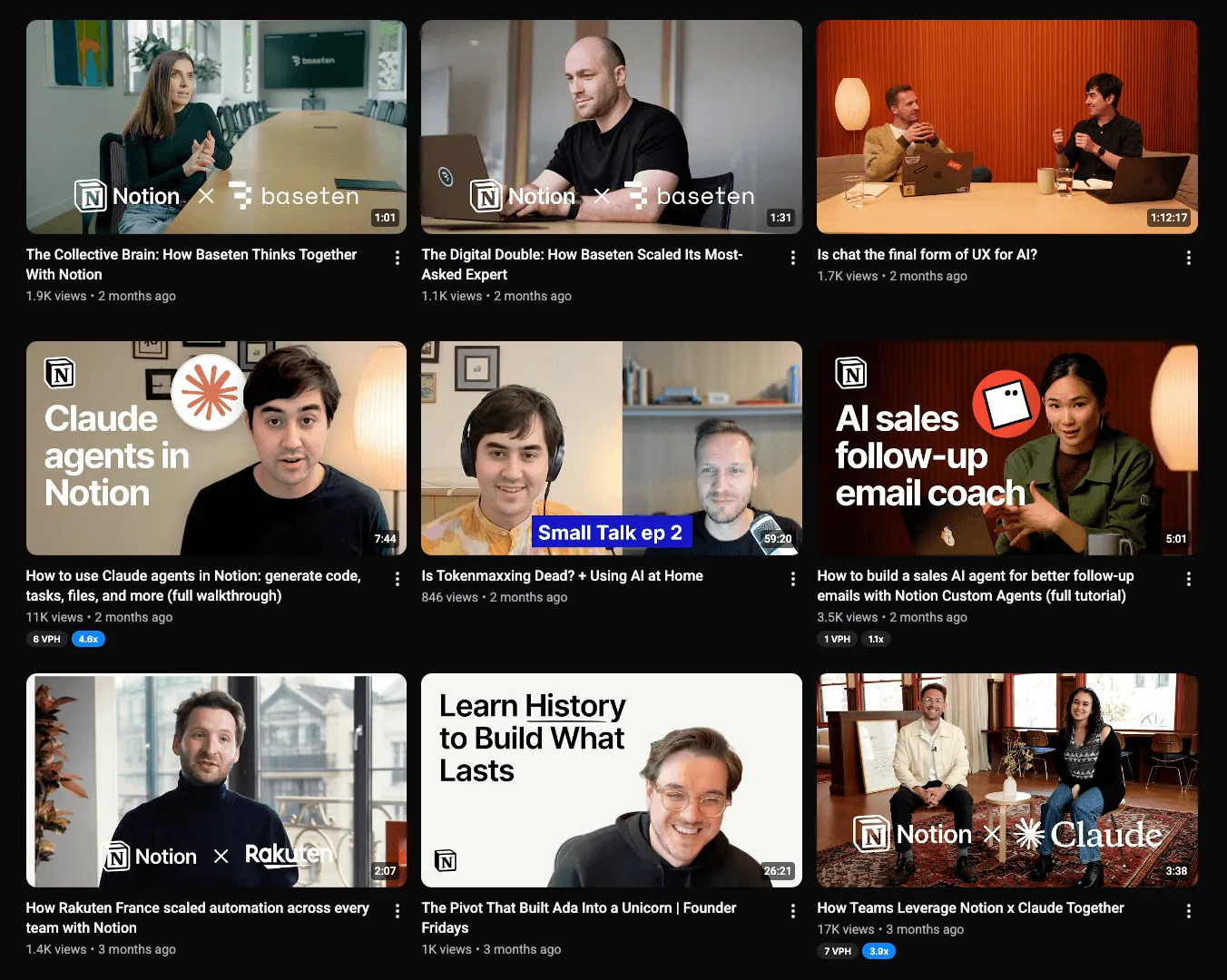
All these videos relate to Notion, but they do not necessarily serve the same viewer: someone looking for a beginner guide may have little interest in a customer story or a long AI discussion.
Now, contrast this with a thriving creator who talks about Notion.
Easlo has videos about building a to-do app for Notion, planning goals in Notion, explaining new updates, turning an iPhone into a second brain, and creating a minimal Mac setup, etc.
They all have something in common: helping the viewer build a better personal productivity system.
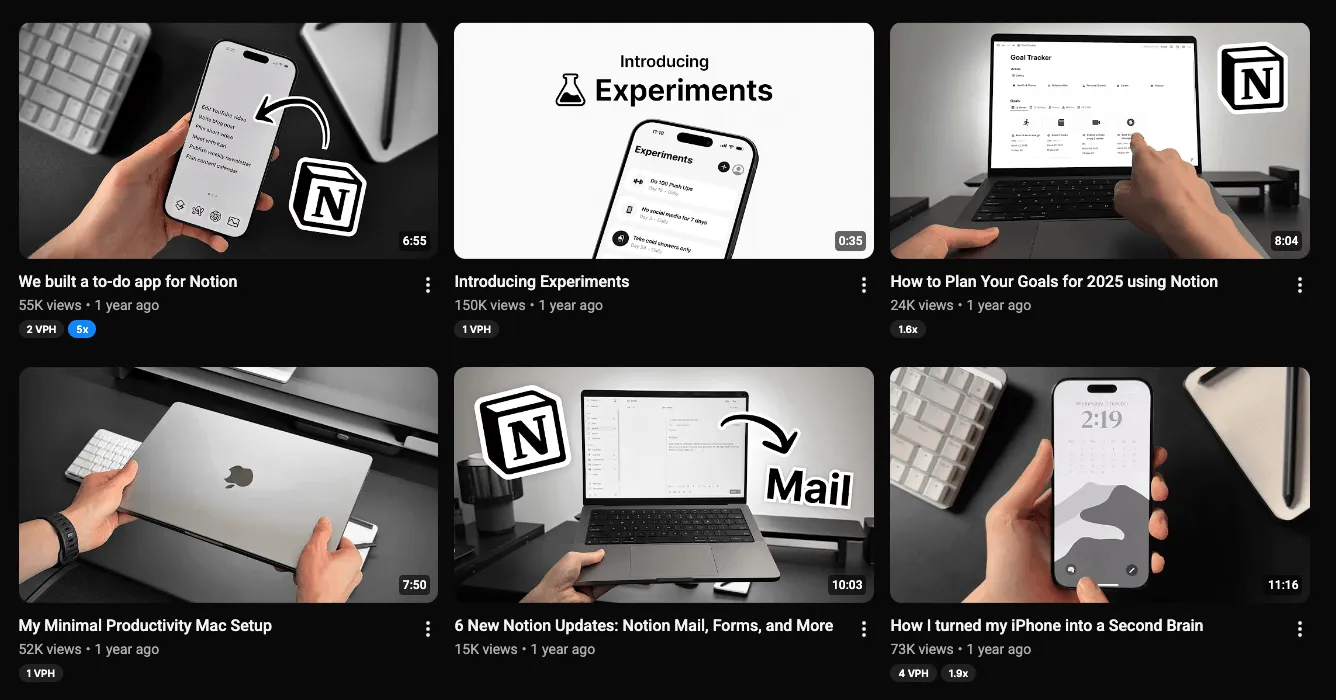
The videos mentioned got between 15K and 73K views with “just” 111K subscribers at the time of writing. That’s 3x smaller than Notion (349K).
The main difference between this thriving creator and the businesses mentioned is audience focus.
Viewers know more or less what to expect from Easlo, which gives them a reason to come watch future videos. But with ClickUp and Notion, viewers don’t have a clue about what they will publish next: will it be an ad? A product update? A 1-hour-long podcast? Who knows!?
Businesses with thriving YouTube channels follow the same principles as creators. Ahrefs is an example, as they focus their main channel on people learning SEO and Marketing.
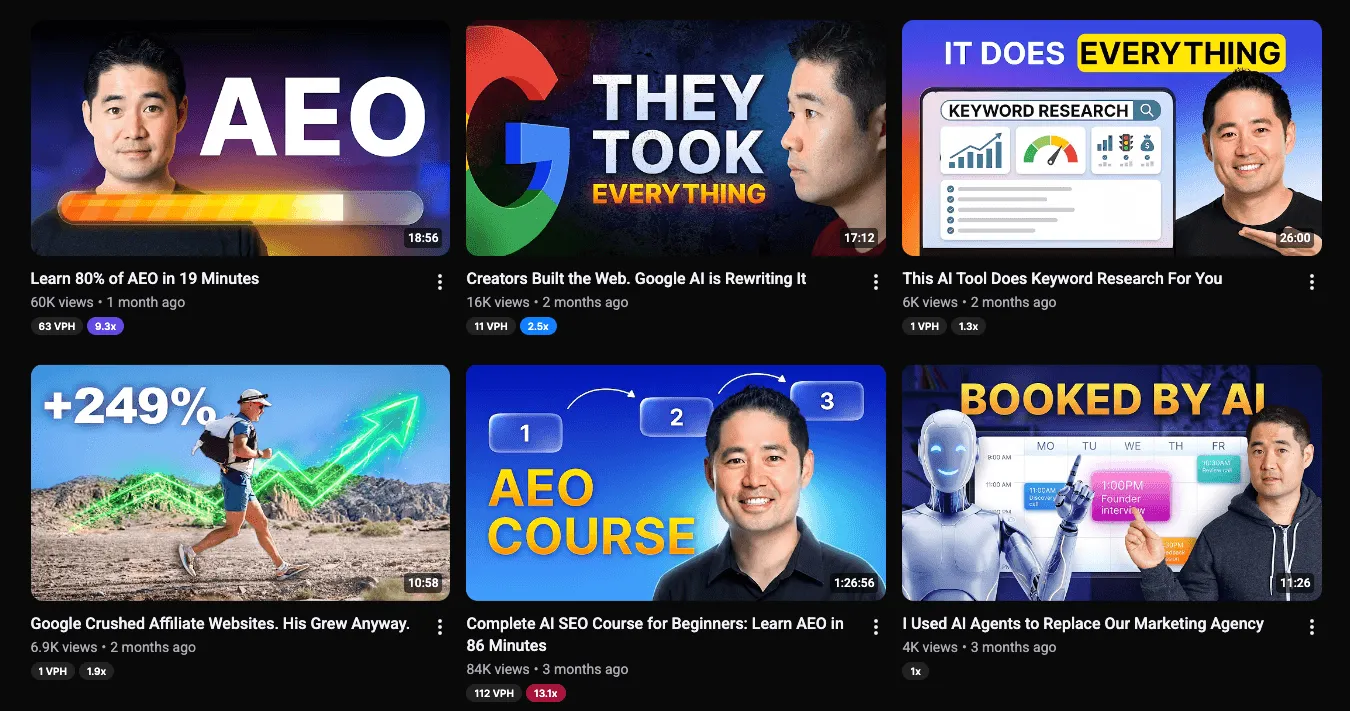
Keeping the channel focus requires publishing content for the same audience, over and over again. That’s an important rule that separates thriving channels from the ones that get people to subscribe but not watch any of their videos.
The next difference is how businesses and creators decide what videos to make.
Join for tips on growing a bussiness with video
Ideation: How ideas are selected
Most businesses start with something they want to promote: a product release, a feature, a case study, etc. Those are mostly self-centered ideas that matter to the business, and the content team has to find a way to turn them into a video.
Thriving creators tend to start with what the audience wants instead. They look for a problem, a desired result, a question, or a topic that viewers have already shown interest in. Products still appear in the creator’s videos, but they aren’t the reason the video exists.
Let’s look at Asana.
Asana published “What’s new in Asana | August 2026”, several AI Teammate case studies, a 20-minute presentation, and a video about how Asana built a goals feature.
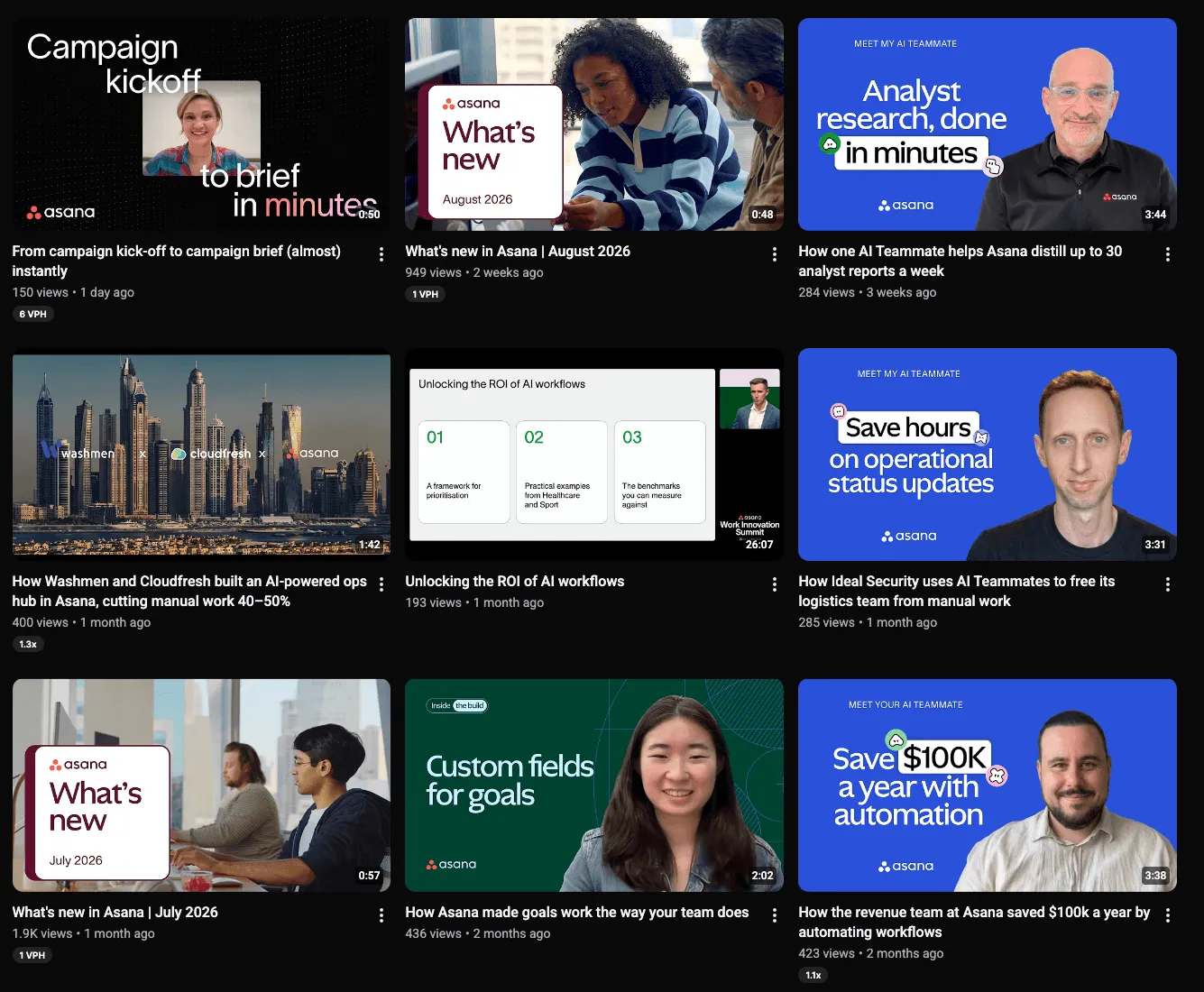
These are textbook examples of videos focused on what the company wants to promote. And most of these videos have fewer than 1000 views.
Again, this doesn’t make the videos useless. The problem is these ideas start with Asana’s internal agenda.
Now compare that with the demand for beginner tutorials about Asana.
MinorCo’s “Asana Project Management Tutorial for Beginners (2026)” has 77K views. Tool Finder has 164K views. These results show strong demand for a specific outcome: learning how to use Asana.
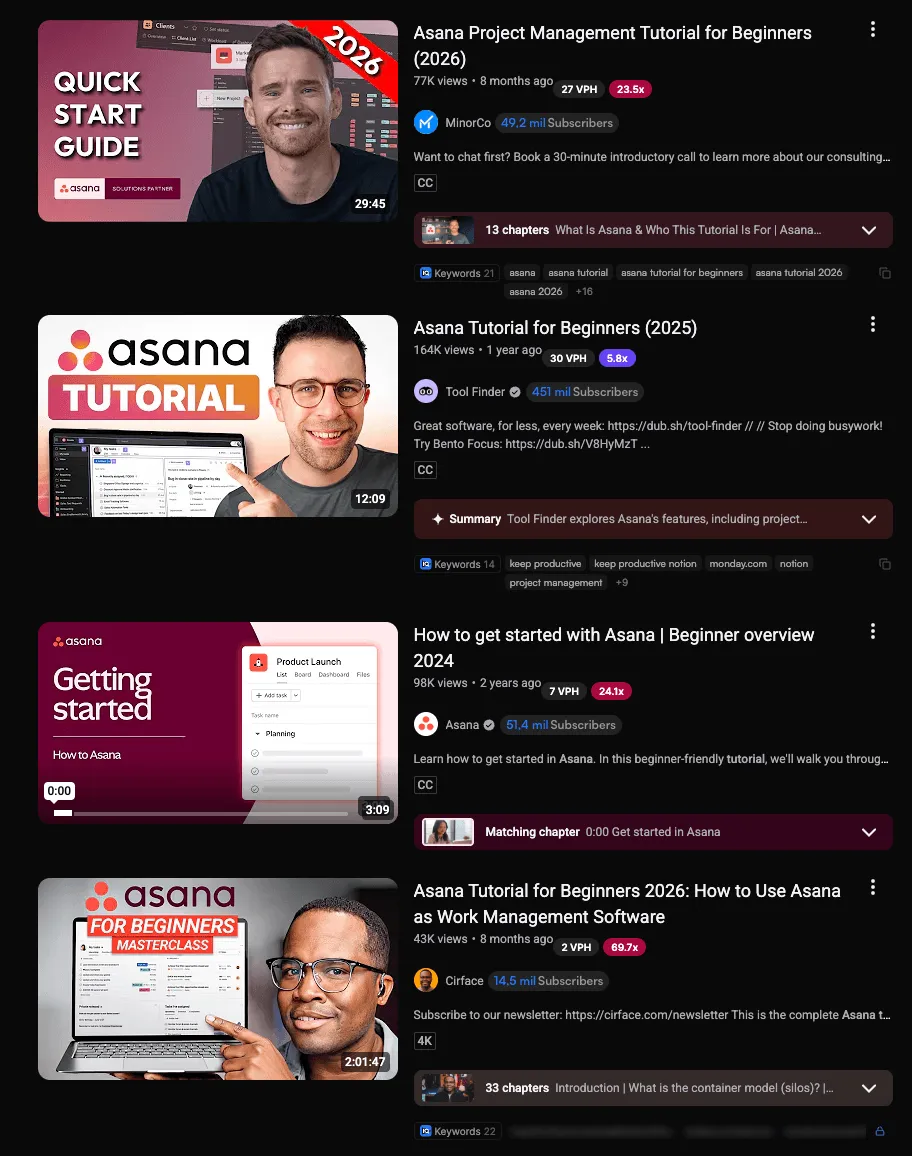
You can see the same approach on the MinorCo Asana playlist where several videos answer specific questions people have about using the tool.
A counterexample is Asana itself: Its video “How to get started with Asana | Beginner overview 2024” has 98K views. This shows the difference isn’t as simple as “creators good” and “companies bad”. When a video interests the audience, people will watch it!
Businesses can follow the creator’s audience-led strategy and make videos focusing on an outcome. But they can’t make viewers care about a topic selected only because it matters to the company.
This is where many business channels get it backwards: they make the software, a feature, or an announcement the subject. Creators tend to make the viewer’s problem or desired result the subject and use the tools to help them achieve it.
VidIQ is a great example of a software company doing YouTube videos with the audience’s needs in mind, similar to creators. They focus on recurring problems such as getting more views, understanding the algorithm, or reacting to YouTube news. Then, the vidIQ tool supports those lessons instead of being the main subject.
The point is clear: If nobody cares about the idea, it’s incredibly hard to make a good video out of it. A strong title and thumbnail can help, but they can’t manufacture demand for something only the company cares about.
And speaking of titles and thumbnails, that’s another point worth going into some detail.
Packaging: How ideas are presented
A good idea alone isn’t enough for a video to succeed. That’s where packaging comes in, and here’s what the official YouTube help docs say about it:
“How you present your content can significantly impact the scale of your reach. Your title and thumbnail are vital for communicating value, sparking intrigue, and setting clear expectations for viewers.”
Good packaging makes a specific viewer understand why they should care:
- The title can promise an outcome or open a curiosity gap.
- The thumbnail can make that promise easier to understand.
Notion does this inconsistently.
The channel changes between partner logos, interview stills, podcast branding, or product screenshots. There isn’t one packaging style repeatedly getting enough attention for a channel of this size.
Their titles also don’t follow popular YouTube title formulas. For example, the video “The Digital Double: How Baseten Scaled Its Most-Asked Expert” doesn’t say what the viewer will achieve by watching.
And the pattern repeats over and over again on Notion’s channel. Look at the title “The Collective Brain: How Baseten Thinks Together With Notion” what does this even mean? This sounds dull and corporate! And the thumbnail is just the 2 company logos.
Notion’s best packages are its tutorials:
- “How to use Claude agents in Notion: generate code, tasks, files, and more”;
- “How to build a sales AI agent for better follow-up emails”
Those videos make it clear what viewers will get by watching. They talk about concrete things like ‘how to build X’ or ‘how to use Y’.
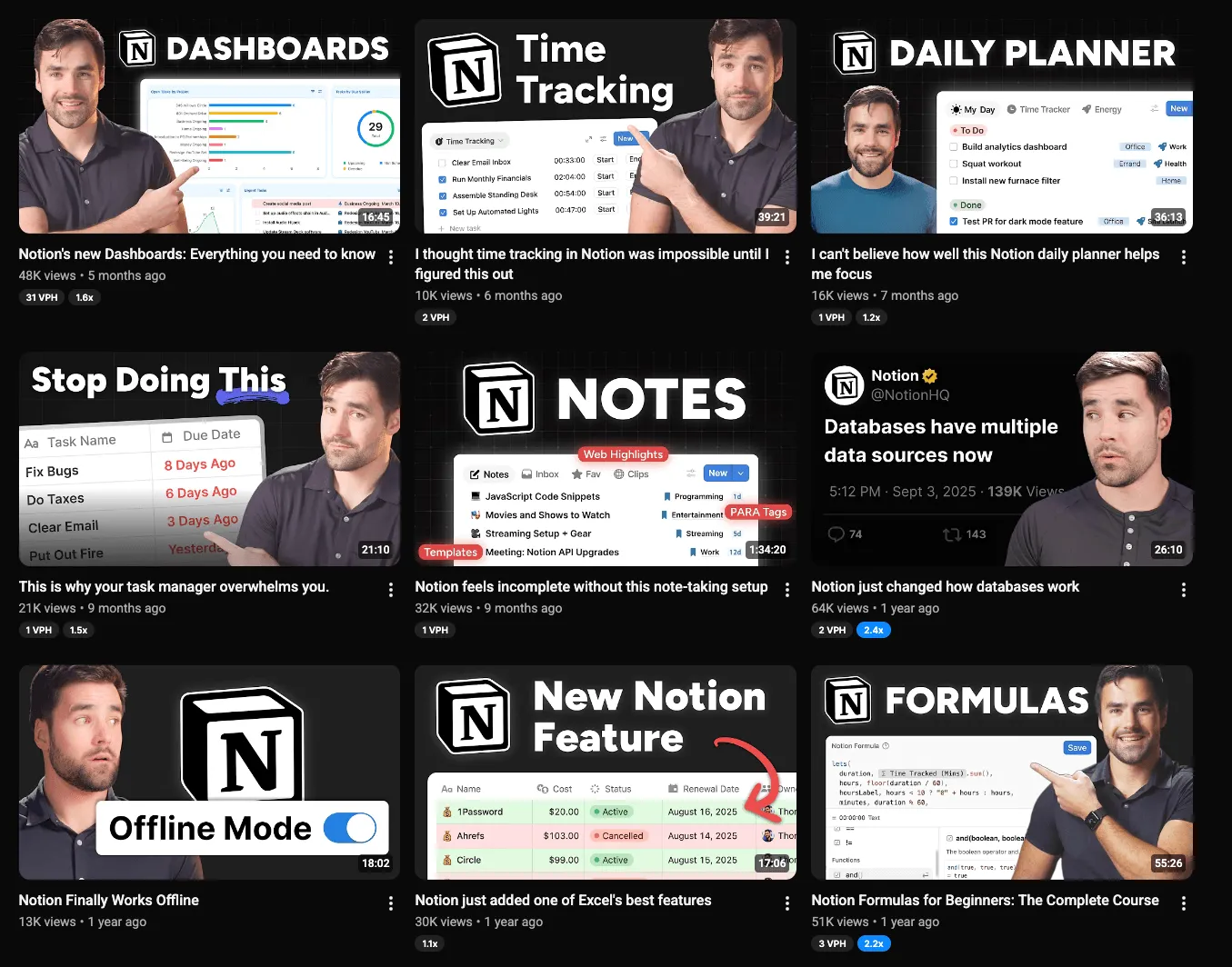
Now let’s compare Thomas Frank Explains, a popular creator, and how he presents videos.
Thomas doesn’t rely on trendy thumbnail styles. The difference is that his titles consistently make Notion features matter to the viewer:
- “Notion just added one of Excel’s best features”: uses a familiar comparison but doesn’t say the feature to create curiosity.
- “This is why your task manager overwhelms you”: starts with a frustration the audience already feels.
His thumbnails then make the topic easy to recognize with a short phrase, the Notion interface, and/or his face.
Jeff Su is another creator in the productivity space who uses title formulas the right way:
- “Learn 95% of ChatGPT Work in Under 20 Minutes”: combines a big result with a small time commitment.
- “How I’d Learn AI From Scratch in 2026 (skip the useless 80%)”: targets beginners, promises a path, and creates curiosity about what they can ignore.
His thumbnails use familiar elements from popular YouTube packaging: faces, recognizable logos, numbers, progress bars, and simple interface mockups.
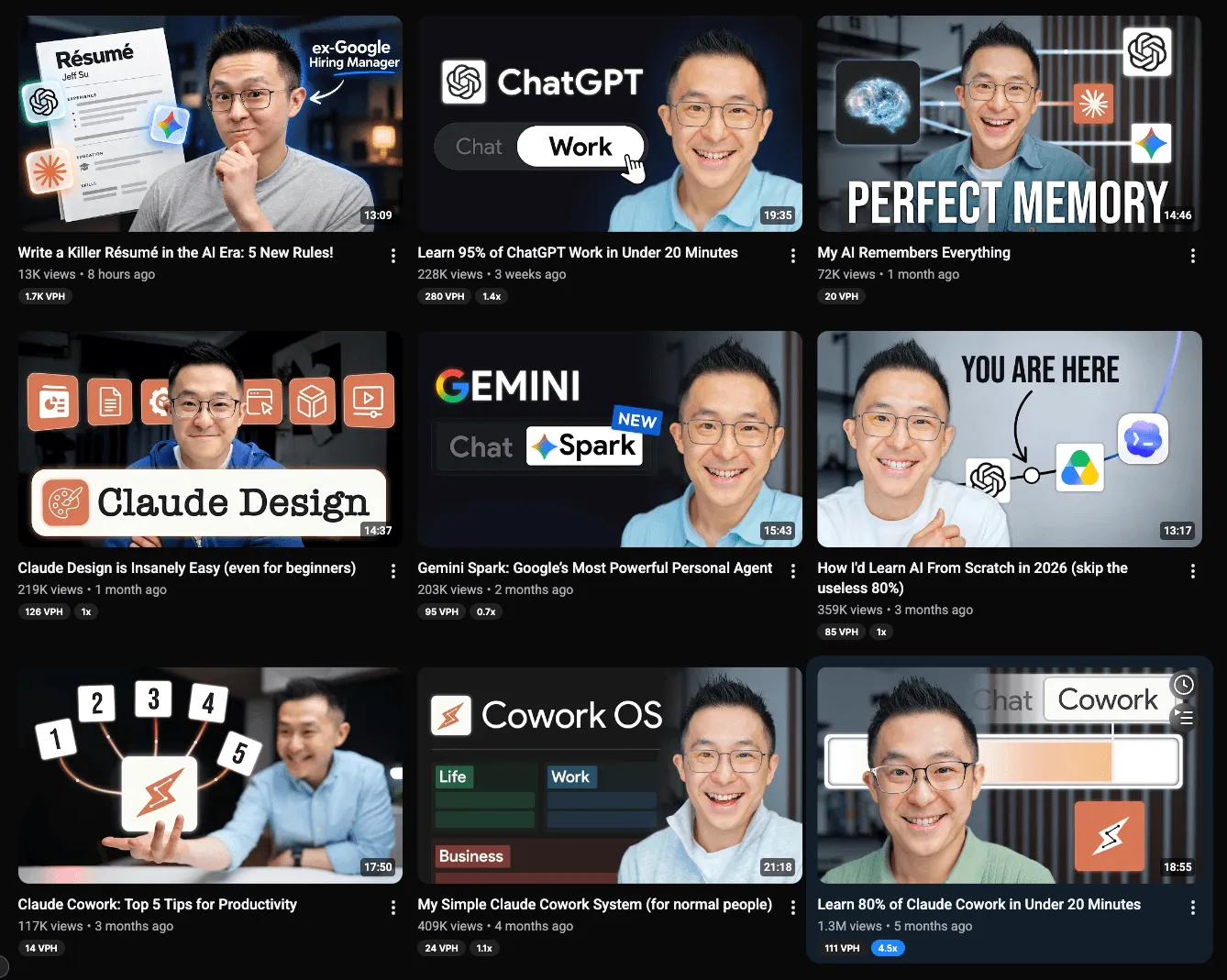
The difference in packaging between these creators and some businesses is massive.
The most successful creators focus on a result, frustration, shortcut, or unanswered question for a specific viewer. Struggling channels, by contrast, focus on things like presenting a partnership or feature without a clear reason to watch.
This helps explain why an extremely popular software company can publish videos that attract only a few thousand views while creators generate far more views and discussion around the same category.
Packaging isn’t everything tho, and the video still needs to deliver on the promise. But if the title and thumbnail don’t make people care, they won’t click to watch.
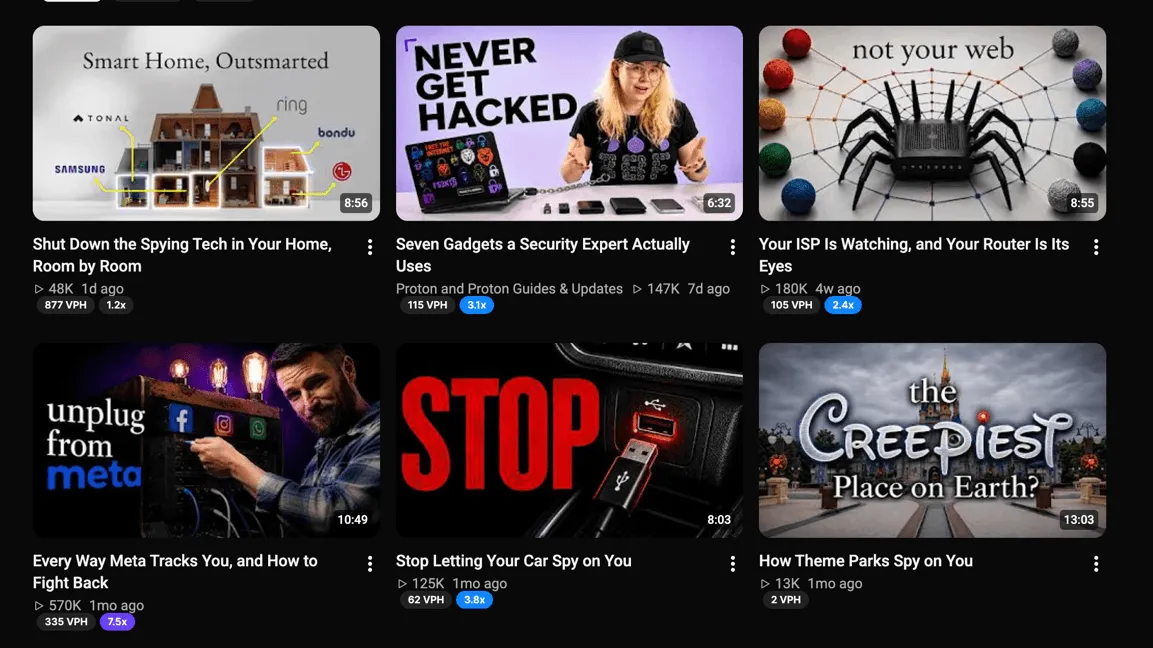
Proton shows that a company can use creator-style packaging without being cheesy. Titles such as “Stop Letting Your Car Spy on You” or “Every Way Meta Tracks You, and How to Fight Back” speak directly to privacy-conscious viewers (their audience).
The thumbnails use warnings, recognizable products, and simple visual metaphors to make things easy to understand.
Feedback loop: Adapting to audience response
The most successful creators don’t just publish a video and move on. They pay attention to what worked and use that info to improve future videos.
They look at whether a video gets more views than usual, how long people watch, what they say in the comments, and whether it helps make more money. If something works, there’s a high chance the creator doubles down! If it doesn’t, change and try something else.
This is how a one-off experiment can turn into a format for the channel.
Udo Onyekwere’s channel is a good example I found recently. Most of his older videos about AI tools had fewer than 1,000 views. Then he started making videos in the style “I watched X so you don’t have to”, summarizing videos from popular creators.
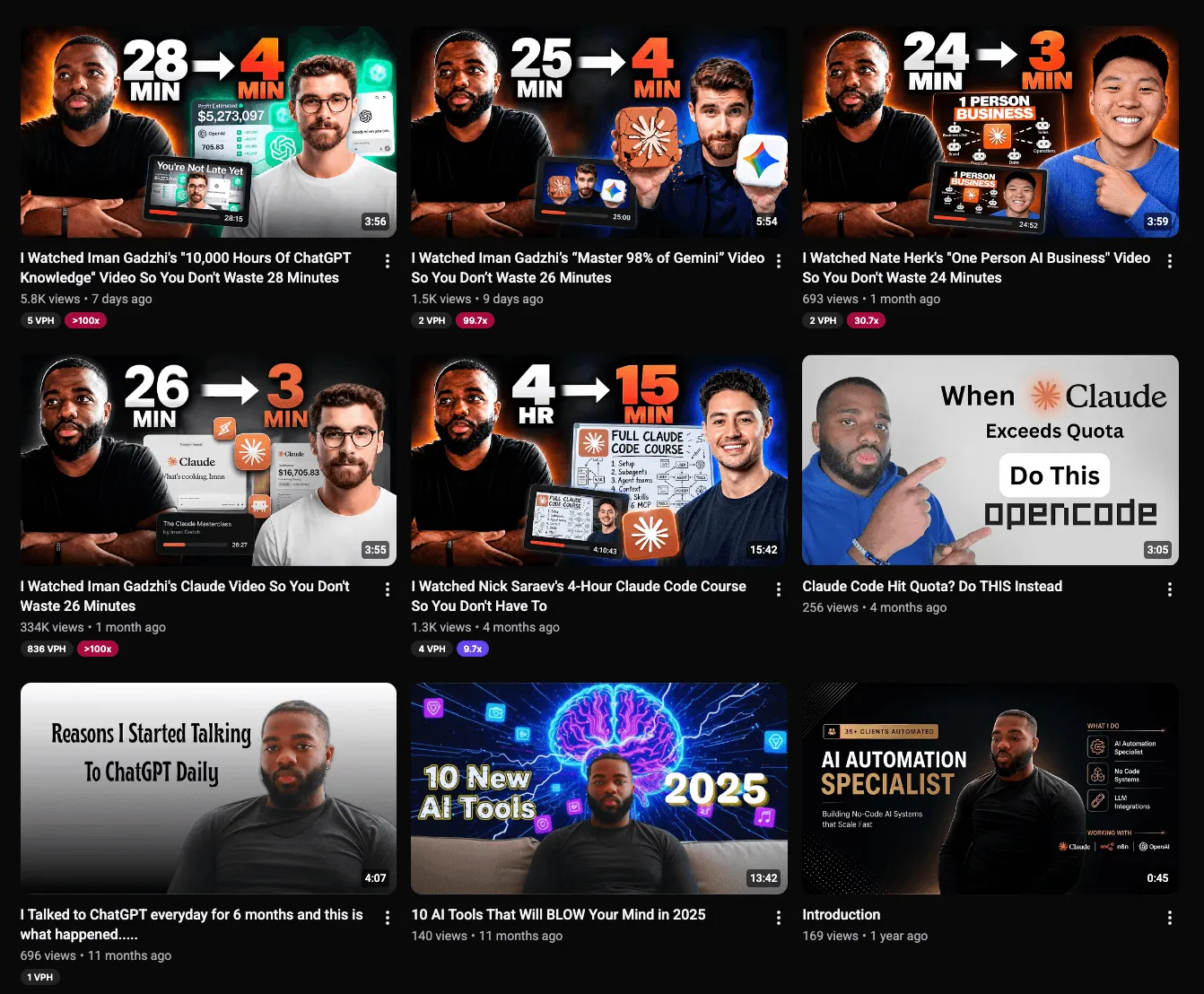
After this change, Udo is getting thousands of views like never before, but it’s not only that: he found a format that works.
I can’t say this format caused every view or subscriber. But Udo found something people wanted to see, kept doing it, and the channel took off at the same time.
So far, Udo has 14 videos in this format, and it shows how fast a creator can react and adapt. I found a comment from early September mentioning he was making great content for a channel with just 260 subscribers, but in just 10 days the channel is already at 10K.
Kevin Stratvert has a similar example at a smaller scale. His first ComfyUI tutorial got 226K views, which was about 6.7 times better than his usual videos (according to the vidIQ extension).
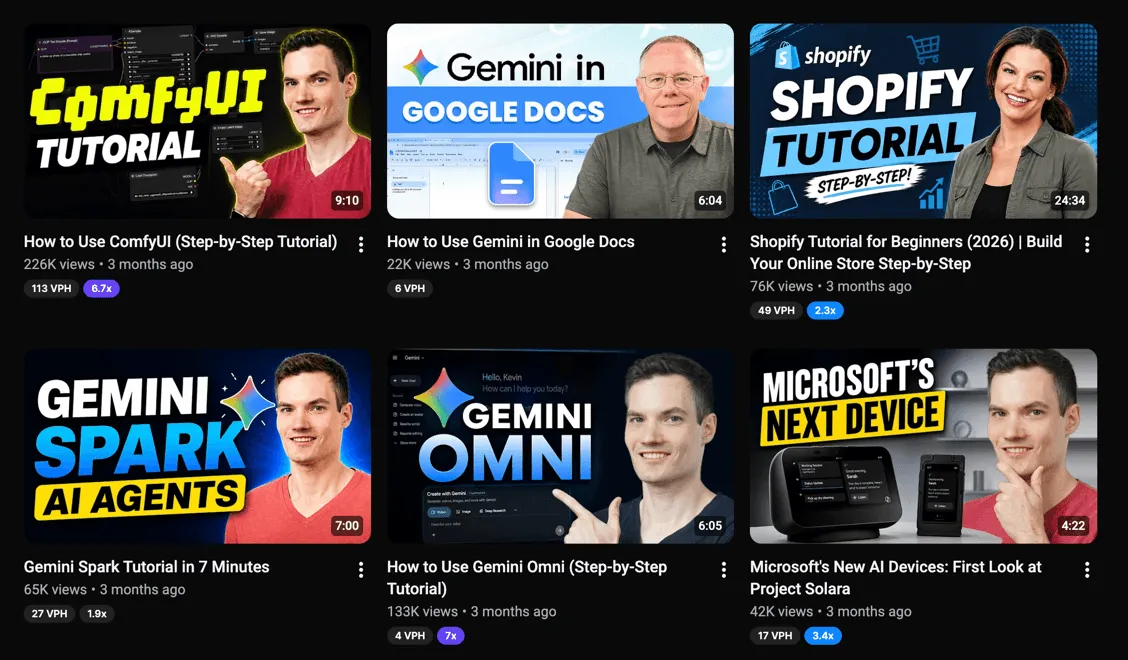
A few weeks later, he published another ComfyUI tutorial. That one also got around 220K views and performed about 14.7 times better than usual.
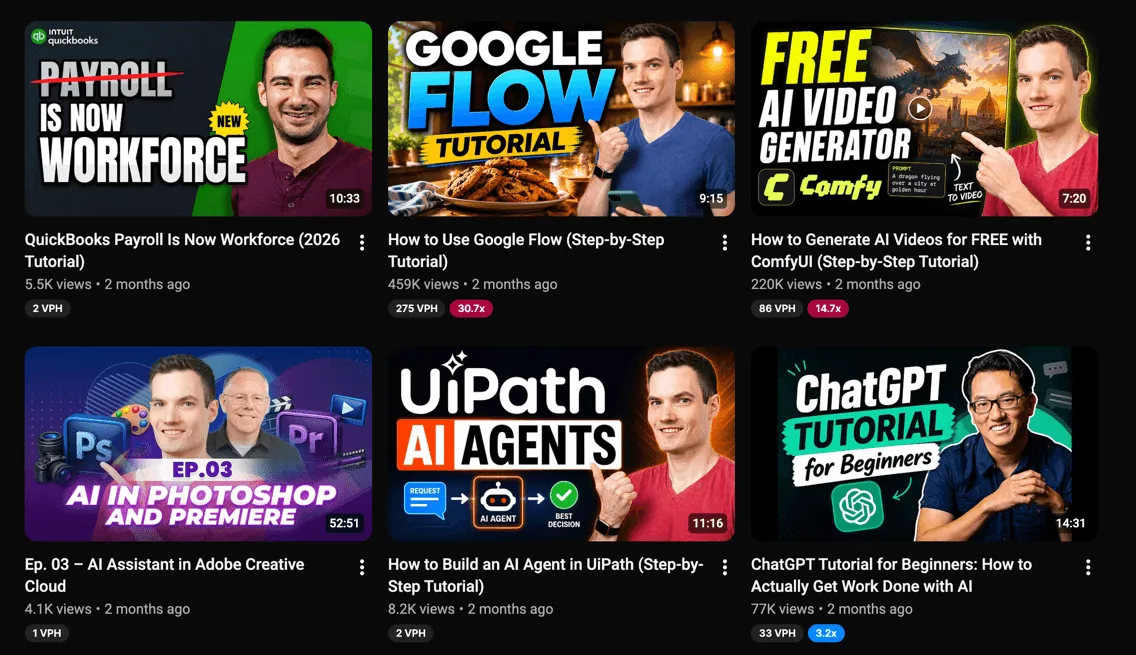
I obviously can’t see why Kevin decided to make the second video. But the first one did better than normal for the channel, and just a few weeks later he made another video about the same tool. It looks like he saw that people cared about ComfyUI and made more of what they wanted.
This is what struggling business channels do differently.
ClickUp keeps publishing the same mix of short product demos, webinar clips, long webinars, and release videos. Those recent uploads struggled to get a thousand views, and the type of videos they publish doesn’t seem to change much over the past months.
Salesforce is even more inconsistent. Its recent videos jump between customer stories, product videos, partnerships, interviews, and promotional content.
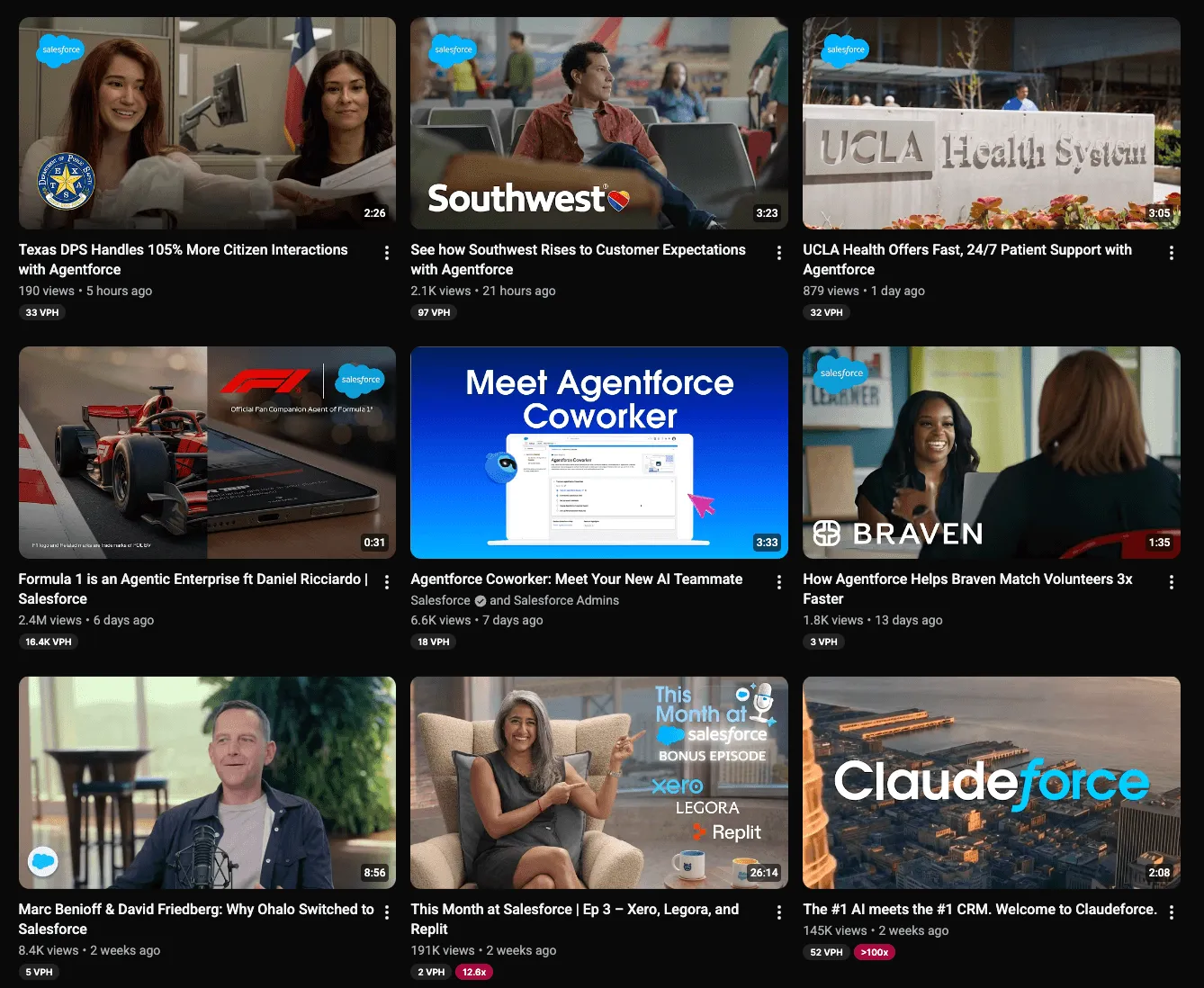
Site note: I’m almost sure Salesforce videos with millions of views are being used as ads on YouTube, so I would not treat them as evidence of organic audience demand. I’m just showing this as an example of a channel that looks more like an advertising reel than appealing to a YouTube audience.
Anyway, thriving creators show signs of adaptation and audience response to decide what videos to make. Struggling business channels keep publishing what the company wants, even when viewers keep showing that they aren’t interested.
Read my Transistor YouTube audit where I show how I would change a channel’s strategy to appeal to one focused audience and make content that’s hard for competitors to copy.
Landing the plane
The main difference between thriving and struggling channels is how much they focus on the audience versus their own internal agenda. You can notice this in what videos are made, how they are presented, and if there’s any adaptation to the audience’s response.
The companies that understand this do well on YouTube. They choose an audience, pay attention to what works, and don’t treat their product as the main reason to watch the video.
If you want me to audit your company channel, contact me. I audit YouTube channels and create strategies to help businesses grow and sell with video content.