

Businesses keep making the same 3 mistakes on YouTube by publishing videos almost nobody wants to watch or chasing views that don’t help their goals.
I’m tired of seeing this happen over and over again, then watching companies change the people on camera as if that will solve the problem.
Let’s see what these mistakes are so you can avoid them.
Using the channel as a video repository
Using a YouTube channel as a video repository is one of the most common mistakes I see. This happens when a company uploads videos without asking if the same viewer will want most of them.
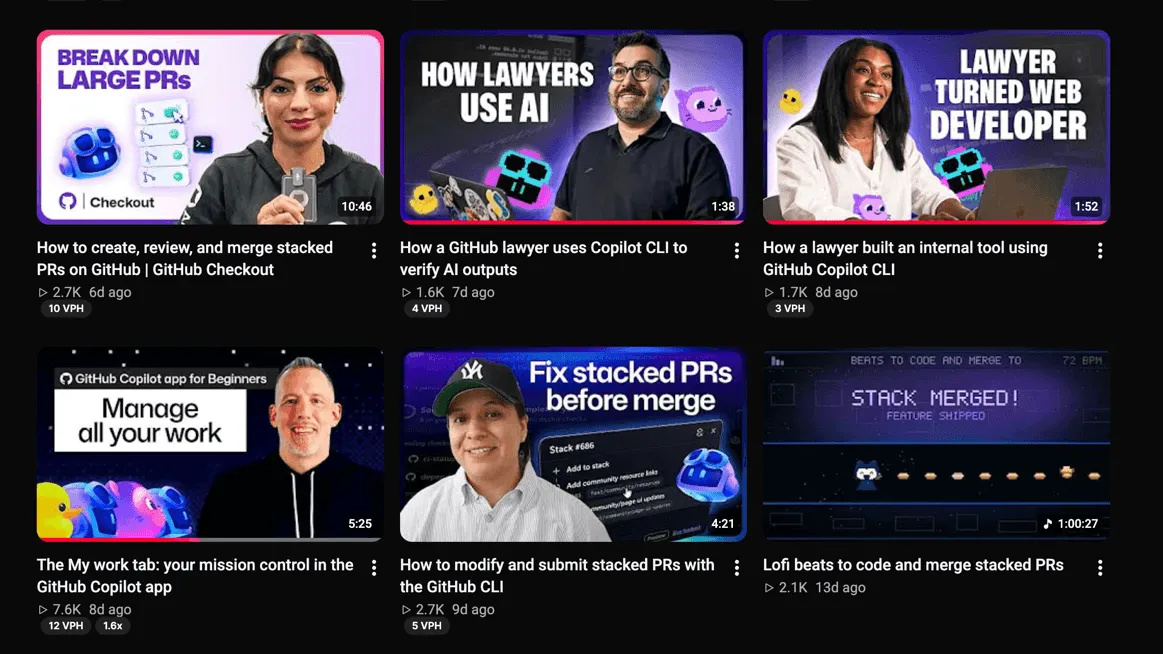
GitHub has 672k subscribers but still struggles to get 5,000 views on most videos! For a company with such a strong brand, these numbers show that something isn’t right, even when they post about AI (the hottest topic right now).
Now, look at Proton with 169k subs consistently getting 100k+ views per video.
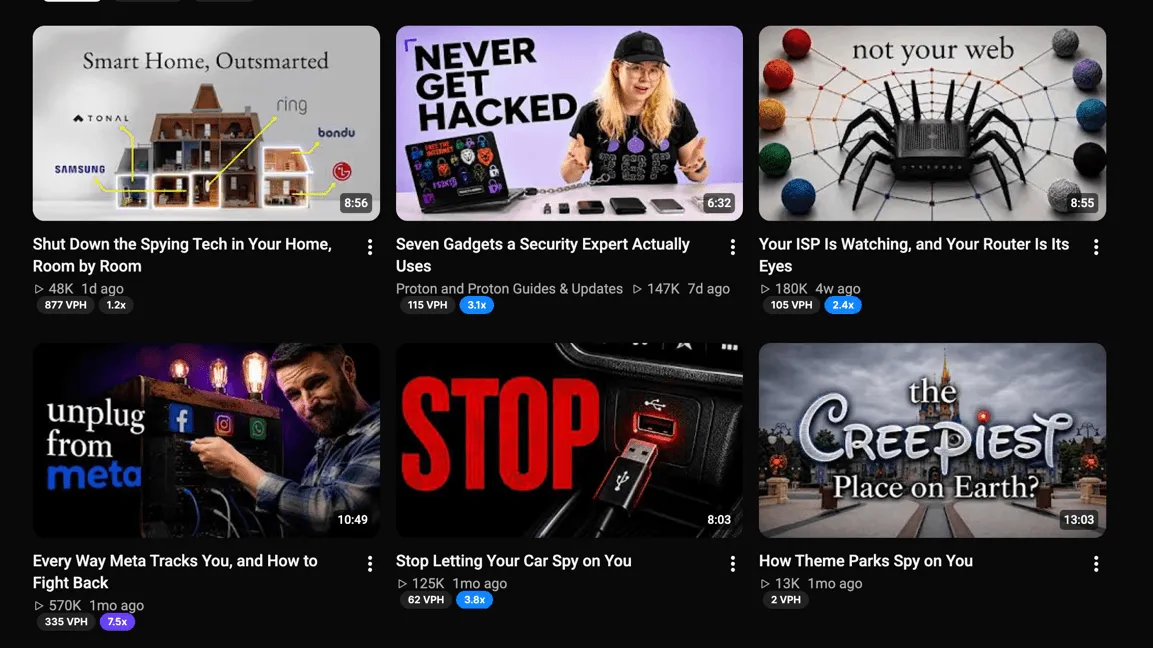
When you put the channels side by side, the differences are clear:
- Proton is making videos for an audience interested in privacy;
- GitHub has posted 3 tutorials for devs, 2 videos about how lawyers use AI, and 1 music video.
This is a typical example of a company using YouTube as a video repository, and, like GitHub, there are hundreds of companies doing so.
And I’m sorry, but you can’t dump unrelated videos into a channel and expect things to work out.
That’s a recipe for failure!
The path to success on YouTube is treating each channel like a TV show, not as a TV station. Each TV show has a clear promise so viewers know what to expect, while a TV station ends up serving unrelated audiences.
In YouTube terms, a channel without focus gives little reason for viewers to return because almost nothing will interest them. And as a consequence, YouTube won’t know whom to show the videos to, as there isn’t a viewer pattern.
Look at Proton as a good example.
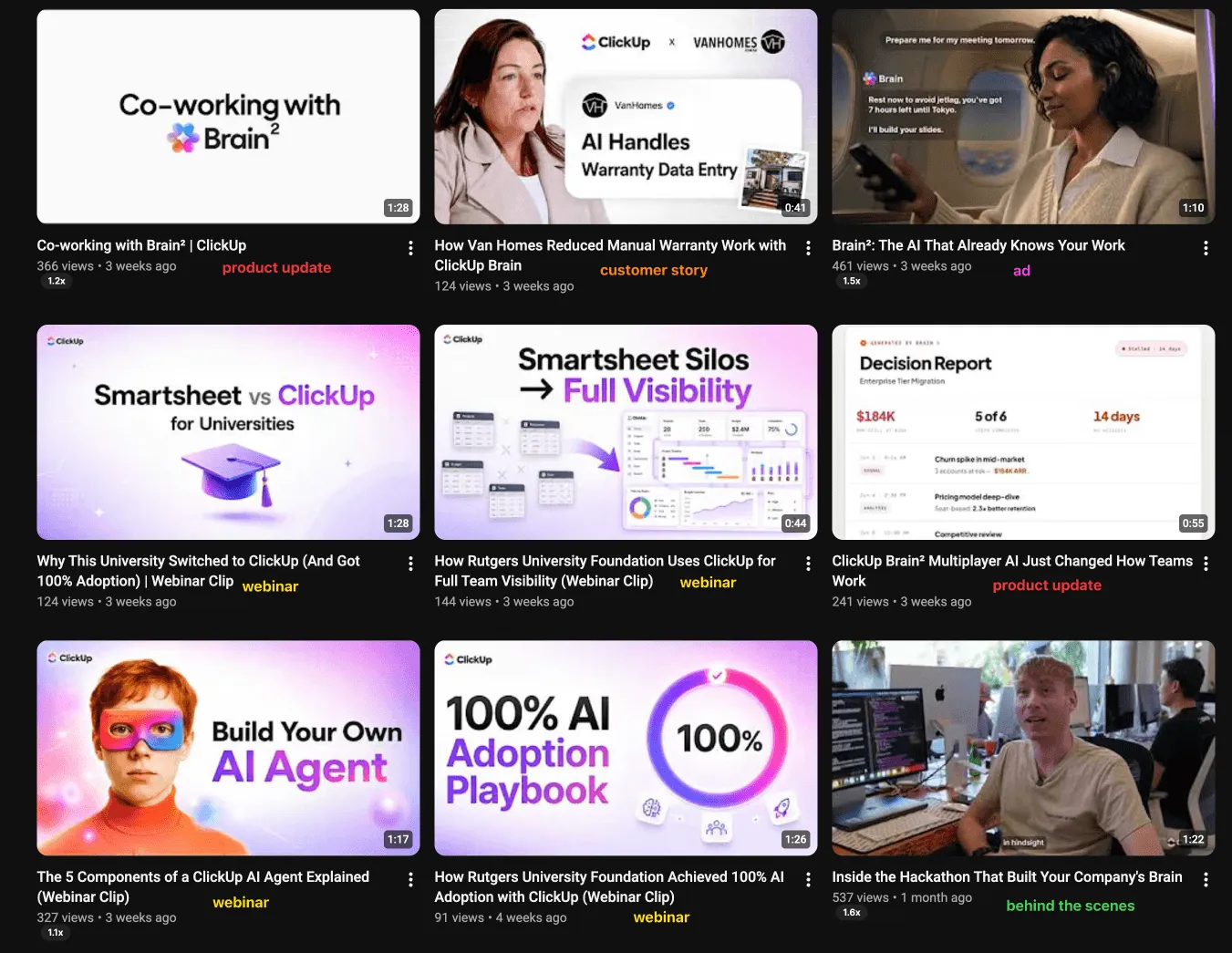
They have 1 channel for broad topics their customers/audience care about (privacy), and a separate channel for product updates and guides.
This is how you split audiences on YouTube.
While most companies try to do everything with only 1 channel, Proton’s channels are in a healthy spot by using YouTube strategically.
In the Transistor YouTube audit I proposed moving product updates and guides to a second channel so the main channel can focus on a broad audience (podcasters).
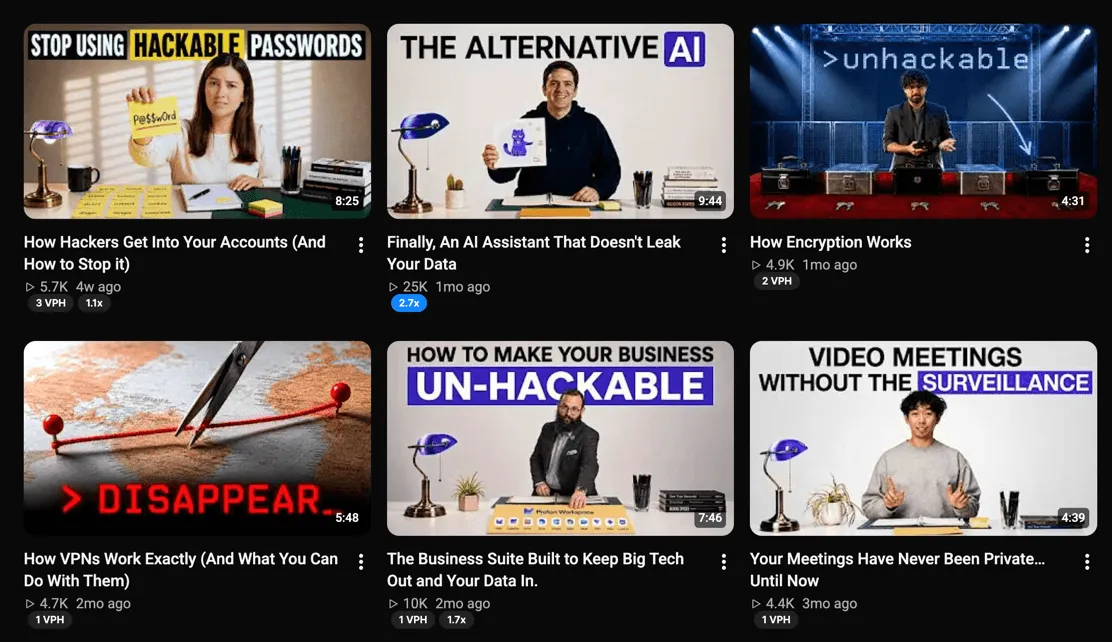
In contrast, ClickUp with 100k subs struggles to get 1,000 views because it’s hard to tell who they are making videos for.
In the screenshot, you can see:
- 4 webinar clips;
- 2 product updates;
- 1 advertisement;
- 1 behind-the-scenes;
- 1 customer story.
Content is all over the place, and there isn’t a defined audience!
Fortunately, not everything is lost when a channel is in a bad spot. It all starts by answering the question, “Who are you making videos for?”, and building the strategy from there. This audience focus is one of the advantages creators have over most company channels: creators tend to make every video for the same type of viewer, while companies often mix product launches, tutorials, ads, and customer stories in the same channel.
VidIQ is a good example of what an audience-first approach looks like in practice. In my VidIQ YouTube strategy teardown, I explain how the company turns recurring audience concerns into specific videos.
I’ll write more in the future about how to fix YouTube channels, but in the meantime, look at Tella as an example.
Their channel was publishing mostly product-related videos, barely getting any views or comments. After Louise changed the strategy to publish content appealing to a core audience, results showed up in just 6 months.
As of August 2026, Tella’s channel had 3,500 subscribers and got 150k views from February-July 2026 (according to VidIQ). That’s 28% of the channel’s total views in just 16 videos.
Join for tips on growing a bussiness with video
No definition of success
Publishing on YouTube without defining a business goal is a mistake.
Back in 2024, when I worked with SEOTesting, the primary goal was to make videos, embed them in blog posts, and see if there was a positive impact on organic rankings.
Views were a secondary success metric in that situation.
This shows the importance of aligning content with your business goals.
A successful channel usually has 1 or 2 of the following objectives:
- Generate more sales;
- Educate customers;
- Increase brand awareness;
- Build or interact with a community.
Different objectives require different approaches, so you need to know what you want to achieve before you do anything with the channel.
Is your objective generating sales, but you are making broad-topic videos? That’s the wrong play, as you can get millions of views and have almost no impact on sales.
On the contrary, you should do broad-topic videos if you want brand awareness. Look at Ghost as an example.
After I audited their channel, my advice is that they should make broad-topic videos to get as many views as possible. Ghost is rarely mentioned as a top-3 newsletter option, and repurposing their content to video could get a lot of people to discover Ghost sooner.
In this example, Ghost succeeds when relevant new viewers discover the tool, not when it generates an immediate sale.

Following the wrong advice
Most YouTube advice is aimed at entertainment or educational channels whose income mostly depends on reach. But a business can use YouTube for brand awareness, sales, customer education, or community building.
I’m referring to things you’ve probably heard, like upload consistency to grow on YouTube.
What’s the point of uploading 1 video every week if it’s low-quality, not related to the business goals, or won’t fit the channel’s content strategy?
For an entertainment/educational channel, the goal revolves around getting more views because that’s how most creators make money.
More views = more ad revenue.
But for a B2B SaaS or even a consultant, more views may not translate into more sales.
Ed Lawrence (a fantastic YouTube strategist) shared an awesome example about views.
One of his videos got 300k views and generated $9k in sales, while another video with “just” 35k views was responsible for $90k.
For his business, one video was 10 times more successful, but you couldn’t tell just from the number of views.
That’s why getting more views isn’t a good metric in a vacuum.
I’m not telling you to optimize all videos for conversions or immediate sales. The point I’m making is that you can’t follow the YouTube advice blindly to get more views.
Another common piece of advice is to avoid doing an introduction in the video.
However, when the person speaking has credibility, the introduction can establish immediate trust with the viewers.
A bad introduction to a video looks like this: “Welcome to this week’s video. Today we are going to talk about [blank], but before we continue, subscribe to the channel, like the video, and turn on the notification bell”.
That intro wastes 20-seconds and makes more than 50% of the viewers leave before you get to the point.
Now, a great introduction looks like this: “Hi, I’m Dr. David Jockers, and millions of people watch my videos to learn how to burn visceral fat. But if I had just 7 days to reverse my own visceral fat, here’s exactly what I’d do.”
This good example was shared by Sam Ocean on Twitter, and perfectly illustrates the point.
I could go on and on, but I think you get the point that most advice out there lacks context.
Always compare YouTube advice with your channel goals. Follow it when that advice supports them, and consider breaking the rules when it does not.
Final thoughts
Most struggling YouTube channels suffer from a lack of strategy. For example, I suggest Bannerbear to make the content plan around their ICP instead of product tutorials.
The companies mentioned have resources to make videos, and they are even spending decent money on them. Yet, the lack of a YouTube-native strategy is the thing holding them back most of the time.
If your company is in a similar position and you want help, contact me.
I audit YouTube channels and create strategies to help businesses grow and sell with video content.