

VidIQ is a useful example of a software company making YouTube videos the audience wants to watch and building a brand identity that supports its business goals.
So, let’s see what lessons you can learn and apply to your own YouTube channel.
Why VidIQ’s YouTube channel is a good example
VidIQ is a software tool that helps YouTubers get more views, subscribers, and become monetized. This makes their YouTube channel part of the company’s credibility, so VidIQ has to practice what it preaches.
If VidIQ’s channel struggled to get views, it would be a bad look for a company teaching other people how to get them.
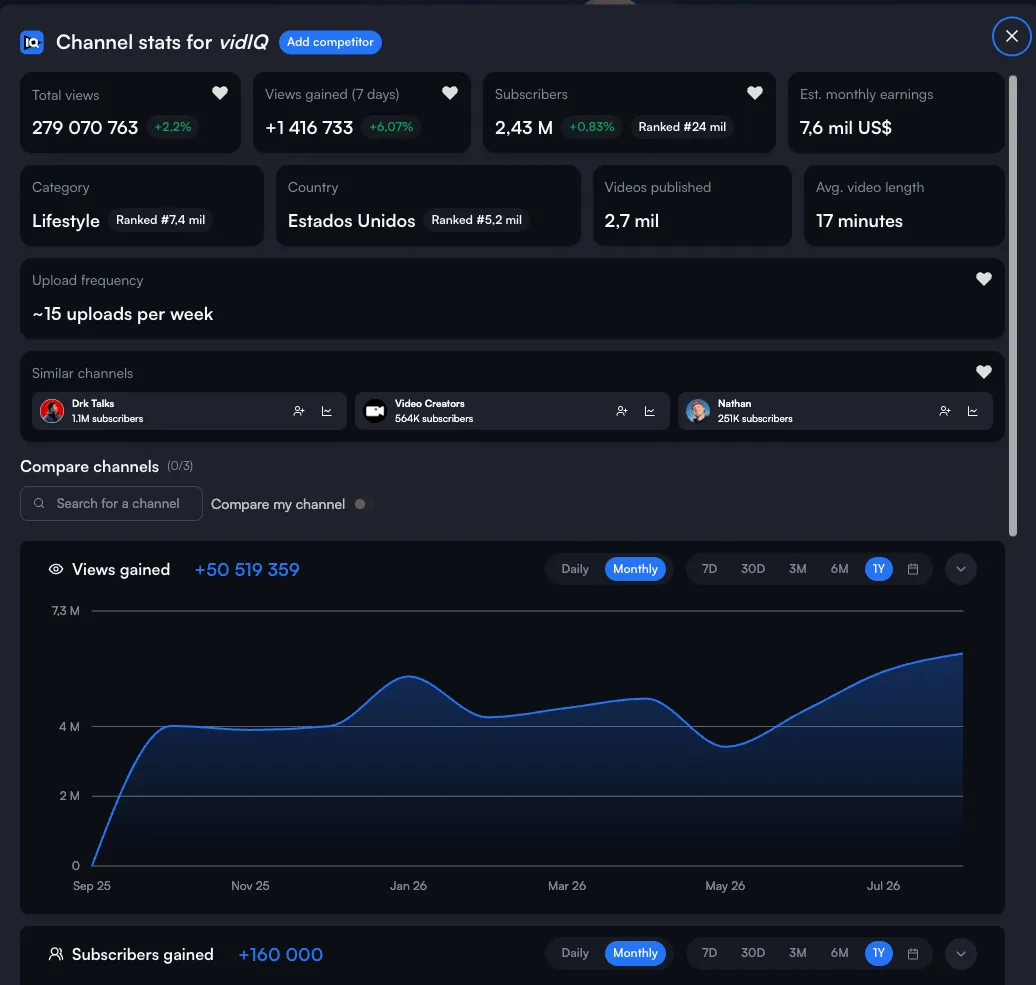
But that’s not the case, as VidIQ has more than 2 million subscribers and has gotten more than 50 million views in the past 12 months.
VidIQ has been consistent for several years, making videos for a specific target audience, which suggests they see enough business value to keep investing. This consistency alone makes it worth studying what they are doing, in my opinion.
Turning the audience’s interests into videos
When you look at VidIQ’s YouTube channel, you can clearly see they make videos based on the audience’s interests. This is in contrast with many companies that make videos based on what they want to promote.
VidIQ makes videos talking about the audience’s concerns, like:
- how to get more views;
- understanding the algorithm;
- YouTube news;
- or how to monetize the channel.
These are recurring topics their customers really care about!
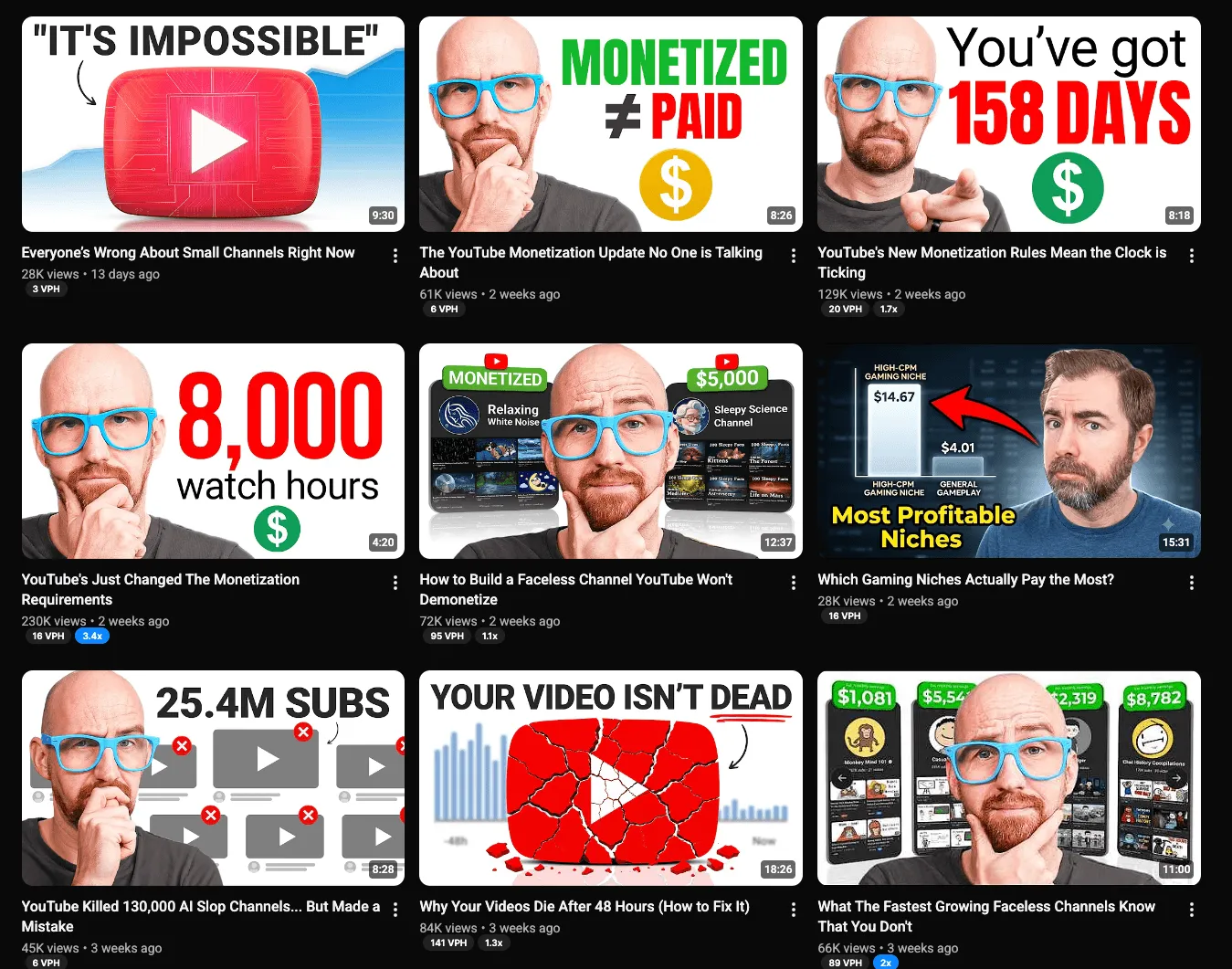
But VidIQ doesn’t settle on making ‘how to’ videos or repeat the same broad advice as everyone else. Instead, they turn a broad topic into specific lessons.
Let’s take ‘how to get more views’ as an example.
They make videos about what small channels can do to get views, or how to fix a video that hasn’t gotten many views in the first 48 hours, or what the common patterns are in viral videos.
Each video is packaged like a small lesson that the audience can watch to learn something new.
The topic ‘getting more views’ is intimidating and vague, but telling the person to change to a new thumbnail or title if the video isn’t performing well after 48 hours is something actionable.
I found the same difference when comparing how creators and companies choose video ideas. Creators usually start with a problem, desired result, or question the audience cares about, while companies often start with something they want to promote.
I know this section might have sounded obvious and basic, but you must understand how to avoid mistakes on YouTube like just publishing videos based on what the business wants to promote instead of what the audience cares about.
Takeaways to improve your channel strategy:
- Build a list of recurring topics and questions your customers/audience ask.
- Use the recurring questions/topics to brainstorm video ideas.
Join for tips on growing a bussiness with video
Building a recognizable channel identity
The next logical step after making videos the audience cares about is to make it all click together. This means building a recognizable identity for the videos.
Look at these 3 video examples from VidIQ’s channel:
- “The TRUTH About YouTube’s New View Counts”;
- “How to Hit 4,000 Watch Hours Before the YouTube Update”;
- and “I Found the Pattern Behind Every Viral Video”.
Each video focuses on a different audience concern, with the titles explaining the situation and the thumbnails presenting a quick claim like “VIEWS ARE UP,” “3,984 watch hours,” or “it’s not luck”.
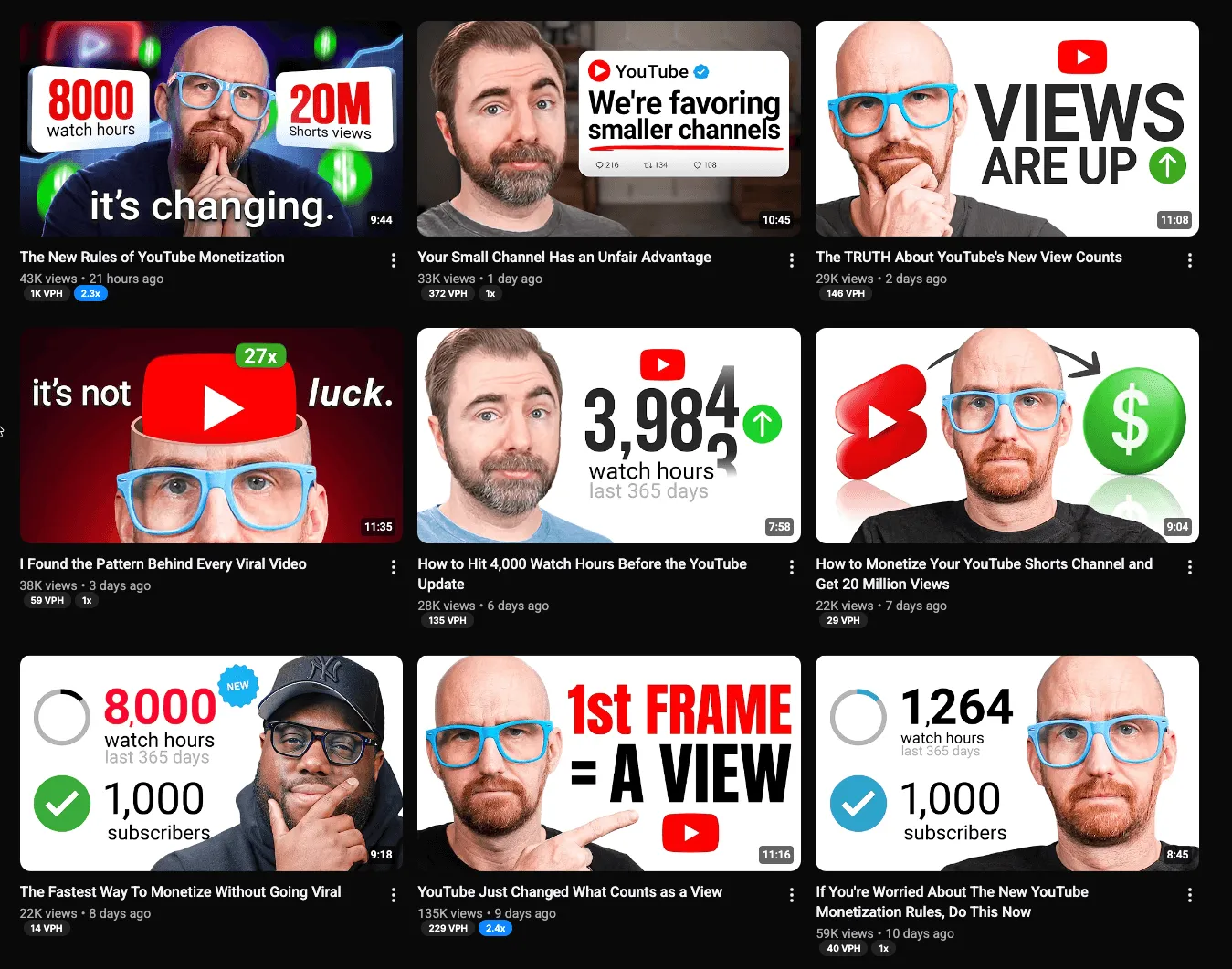
In those thumbnails, you can see VidIQ’s visual identity, like the presenters, the use of big text, simple YouTube symbols, etc.
The usage of repeated visual cues across videos makes the thumbnails recognizable at a glance. And together with the title angles, this builds a recognizable channel identity.
But an important lesson is that thumbnails don’t always need to look the same.
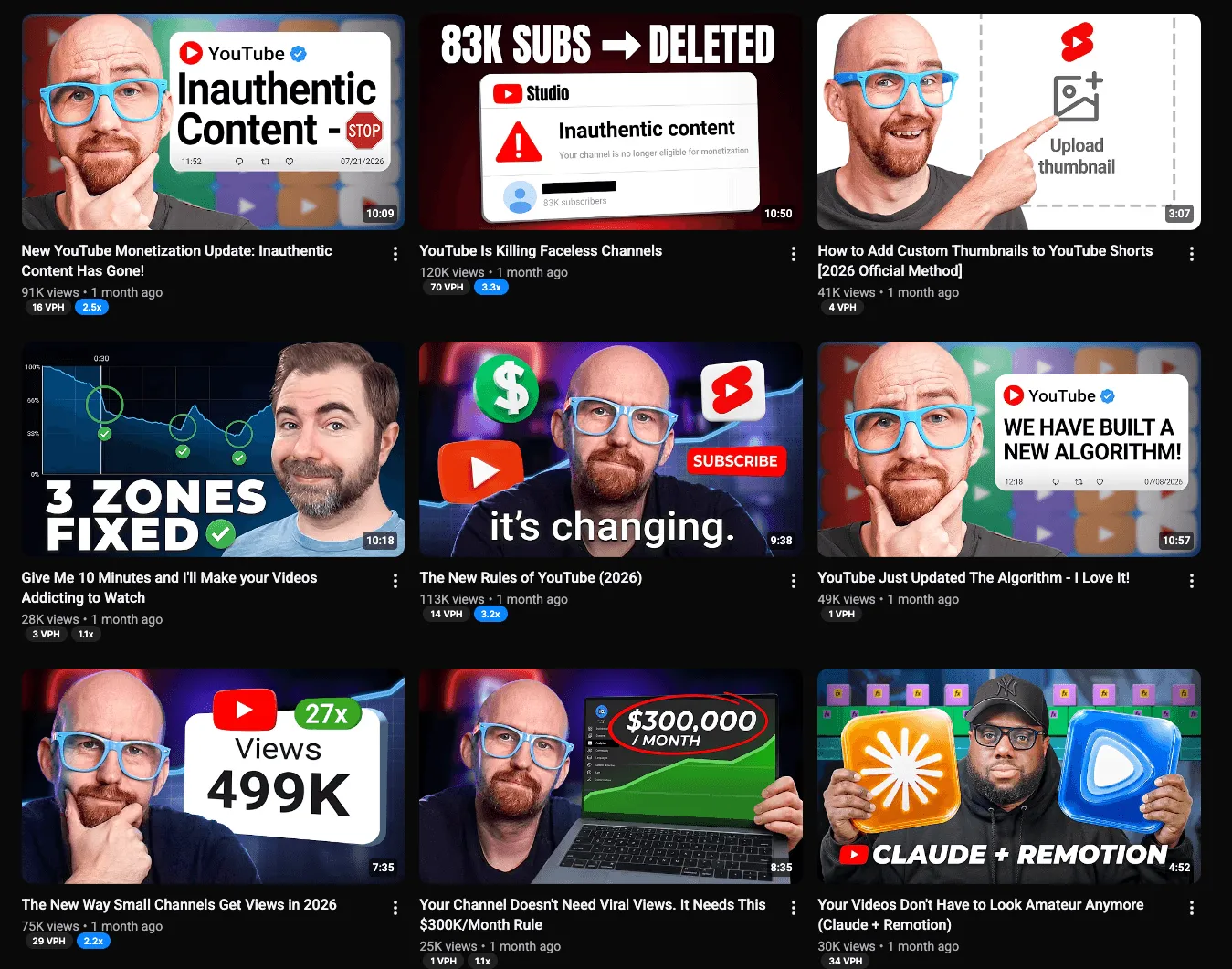
VidIQ still experiments with thumbnail layouts and colors, as not all thumbnails show a face and use red text on a white background.
A channel identity comes from making videos about similar topics while using a small pool of visual elements that rotate from one video to another to keep consistency.
In my Transistor YouTube strategy audit, I apply this idea by turning the channel’s existing studio, yellow accent colour, and founder into a repeatable thumbnail system.
One thing that suggests VidIQ’s approach is working is the consistent view count. From the 27 videos I reviewed, 18 had between 25K-75K views while covering different topics.
These results show their approach is not trial-and-error.
Of course, views alone can’t prove a video worked. But the interesting part is the consistent number of views, suggesting VidIQ is packaging videos in a way that gives the audience a reason to click and watch.
Takeaways to improve your channel identity:
- Write titles that appeal to at least one emotion (fear, curiosity, or desire);
- Use repeated visual elements across thumbnails to build an identity (similar font, text color, presenter picture, etc).
- Review the results and adapt the packaging based on the audience response.
Don’t be afraid to experiment.
Building channel identity is an iterative process. You can change the thumbnails and titles on old videos if you want to, and the channel can change its visual style over the years.
To find title ideas worth testing, my Bannerbear YouTube audit shows how I used outlier research to identify title formulas for company videos.
Giving the channel a job
Getting views on YouTube is important, but for a business that’s not enough.
In VidIQ’s case, the channel’s main job is to educate and build familiarity with the right people. They make videos for YouTubers and aspiring YouTubers, who are also the target audience for their software.
There’s a lot of overlap between what VidIQ’s videos teach the audience and what their software helps customers achieve.
This means VidIQ has spent years building a relevant audience for their business, one that can actually become customers and pay for the tool.
And every video that helps their ideal customer is another chance to build trust and stay familiar to creators who may need a tool to grow on YouTube.
VidIQ has followed this YouTube strategy for several years, which suggests the company sees enough value to keep investing in it.
Takeaways to give your channel a job:
- Define the business result you expect from the channel, such as educating potential customers, increasing brand awareness, driving website traffic, generating sales, etc.
- Measure the success using evidence connected to that result. For example, track website visits or sales if those are the goal instead of assuming that more views help achieve the goal.
For example, I audited Ghost’s YouTube channel and proposed some changes to help their channel increase brand awareness by making videos about different topics.
Landing the plane
VidIQ is a strong example of an audience-led business YouTube channel.
They make videos about topics the audience cares about, the packaging is consistent to build a channel’s identity, and the audience is also their potential customers.
If you want me to audit your company channel, contact me. I audit YouTube channels and create strategies to help businesses grow and sell with video content.